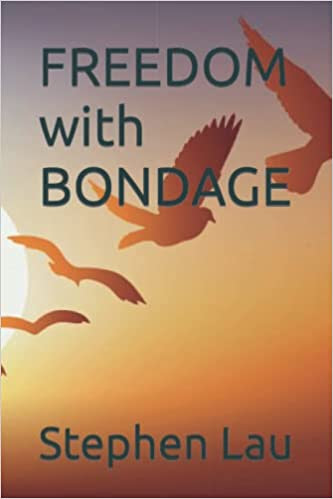
Newly published book: FREEDOM wiyh BONDAGE

Newly published book: <b>FREEDOM wiyh BONDAGE</b>
Newly published book FREEDOM with BONDAGE: You have NO FREEDOM of choices if they are controlled by your flesh to do all the wrong things, and you are held in BONDAGE.

Saturday, January 5, 2019

Medicine to Treat Stress

Medicine to Treat Stress

Western Medicine

Conventional wisdom has many different ways to help coping with stress.

Conventional Western medicine uses advance science and technology for diagnosis and treatment of symptoms of diseases or disorders related to stress

All remedies in Western medicine involve chemicals, some of which are even toxic to human health. In the beginning of the 20th century, Western medical science had dismissed even traditional Western plant remedies as folklore medicine—concoctions only for grandmothers but not for professionally trained doctors.

With the emergence of the pharmaceutical industry, Western scientists began to focus almost exclusively on chemical drugs to treat different diseases with different symptoms. A case in point is human cancer. In the early 20th century, cancer was relatively unknown, but the number of cancer cases soon began to explode exponentially. With the growth of the billion-dollar pharmaceutical industry and the need to validate the potency of these chemical drugs, more research studies have to be conducted. Given that Western medicine aims at treating the symptoms rather than eradicating the root causes of a disease, and that chemical drugs often generate many adverse side effects, more new chemical drugs have to be developed to treat those newly emerging symptoms.

The general approach of conventional Western medicine is to “cure-all.” Unfortunately, all pharmaceutical drugs, irrespective of their potency in suppressing symptoms of diseases and disorders, are toxic chemicals that ultimately create more stress in the body system.

Consider the pros and cons of conventional Western medicine in relieving stress symptoms. The wisdom is to think twice before you reach out for your sleep medications or antidepressants.

Traditional Chinese Medicine

Traditional Chinese Medicine (TCM) is based on the wisdom of more than 2,000 years of sophisticated techniques of observation and diagnosis of diseases and disorders. The medical system is founded on the concept of balance and harmony (yin and yang) with focus on diets, herbs, energy healing (acupuncture), and body massage, among others.

The fundamental concept underlying Chinese medicine is Tao wisdom, which essentially means that “all things develop naturally” or “one power underlying all.” That is to say, all things are what they are, and they come into being as well as decay for what they are.

The balance and harmony of yin and yang is also reflected in the Five Elements (wood, fire, earth, metal, and water) representing the five processes that are not only fundamental to the natural cycles of nature but also corresponding to the different organs of the human body.  To illustrate, wood feeds on fire to produce ashes (earth); without which there is no metal; the metal inside earth is heated, liquefied by fire to produce water through condensation; without water, there is no wood, and hence no fire, no earth, no metal, and no water. Each of the Five Elements is equally important, and each is responsible for the five processes of action and interaction in the cycle of nature, balancing and complementing one another for co-existence and harmony, which is the essence of overall health and wellness, including freedom from stress.

In addition, in the human body, wood relates to the liver (yin) and the gall bladder (yang); fire relates to the heart (yin) and the small intestines (yang); earth relates to the spleen (yin) and the stomach (yang); metal relates to the lungs (yin) and the large intestines (yang); and water relates to the kidneys (yin) and the urinary bladder (yang). They control and regulate each other for maintenance, sustenance, and survival.

Furthermore, Chinese medicine focuses on plants as remedies. Plants are essential to life. In fact, nearly all human food comes from plants or animals that eat plants. Accordingly, in Chinese medicine, the number of plants used as medicines is greater than the number of plants for food. In Chinese medicine, there is not much distinction between a food and a medicine. Even thousands of years before Christ, the Chinese believed that every single plant on earth has its specific function in the well-being of an individual.

Unlike conventional Western medicine, the ultimate objective of Chinese medicine is to “heal-all.”

Stephen Lau
Copyright© by Stephen Lau

Friday, January 4, 2019

Living in a World of Depression

Living in a World of Depression

“Depression has been called the world's number one public health problem. In fact, depression is so widespread it is considered the common cold of psychiatric disturbances. But there is a grim difference between depression and a cold. Depression can kill you.“ David D. Burns

We all have a depressive mind because we are all living in a world of depression. The only difference is that our depression may all differ in intensity: slight, serious, or severe. The truth of the matter is that each and every one of us is depressed, without any exception, because we all experience our depressive episodes at some points during our lifespan, and it is very normal. However, many of us prefer to deny or ignore our emotional dysfunction due to the stigma that is often associated with depression.

Depression is not a new human disease or disorder; it is as ancient as man:

    "so I have been allotted months of futility,
    and nights of misery have been assigned to me.
    When I lie down I think, ‘How long before I get up?’
    The night drags on, and I toss and turn until dawn.
    My body is clothed with worms and scabs,
    my skin is broken and festering.
    “My days are swifter than a weaver’s shuttle,
    and they come to an end without hope.
     Remember, O God, that my life is but a breath;
    my eyes will never see happiness again.
     The eye that now sees me will see me no longer;
    you will look for me, but I will be no more.
     As a cloud vanishes and is gone,
    so one who goes down to the grave does not return.
    He will never come to his house again;
    his place will know him no more.
    “Therefore I will not keep silent;
    I will speak out in the anguish of my spirit,
    I will complain in the bitterness of my soul." (Job 7: 3-11)

“Answer me quickly, Lord; my spirit fails. Do not hide your face from me or I will be like those who go down to the pit. Let the morning bring me word of your unfailing love, for I have put my trust in you. Show me the way I should go, for to you I entrust my life.”
(Psalm 143: 7-8)

In modern age, Sir Winston Churchill, the Prime Minister of Great Britain, underwent serious bouts of depression during his country's national crisis in World War II. The fact is that depression is no respecter of persons—even for those with very high I.Q., such as the Nobel Prize winning author Ernest Hemingway who committed suicide just as his father did with the comment “I’ll probably go the same way.” Indeed, many of us are vulnerable to this genetic mental disorder.

Sadly, depression is currently increasing at an alarming rate because the world we are now living in is getting more challenging, more complex, and more complicated each day passingit has now become a world of depression.

Do not avoid depression with medications; instead, go through depression in order to overcome it. Follow the TAO, which is the Way through depression.

Stephen Lau
Copyright© by Stephen Lau

Thursday, January 3, 2019

Why We Should Forgive

Why We Should Forgive

Forgiveness is letting go of grudges and bitterness when you are hurt by someone. Forgiving is neither forgetting nor excusing the harm done to you.  Instead of holding on to your anger, resentment, and thoughts of revenge, you now decide to embrace forgiveness and then move forward. In reality, you are actually embracing peace, hope, gratitude  and joy—the fundamentals of human happiness. 

Forgiveness can also lead to the understanding of empathy and compassion for the one who hurt you. Forgiveness is a pathway to spirituality, and ultimately to human happiness.

An illustration

In September 24, 2016, runner and cyclist Dean Otto was struck by a car driven by Will Huffman, a 27-year-old salesman, with his buddy on their way to a football game. The crash left Dean Otto paralyzed with his broken vertebrae, a broken pelvis, broken tailbone, a broken right leg, and several broken ribs.

After assessing Otto’s condition, Dr. Matt McGirt told the Otto family that Dean Otto was 99 percent likely going to spend the rest of his days in a wheelchair. It was sad and scary news for the Otto family.

But Otto was never scared—or even resentful. Instead, he said a private prayer and instantly forgave Will Huffman. “I knew if I didn’t, the resentment would eat me alive.”

After the surgery on his spine performed by Dr. Matt McGirt, Otto began his miraculous recovery. As a matter of fact, a few hours after the surgery, Otto was able to wiggle his toes.

Through Facebook, Will Huffman and his wife were finally able to contact Otto’s family, who welcomed them graciously with open arms.

Huffman was not surprised that Otto would forgive him, but he did not expect or imagine that they would become good friends afterwards. Huffman says, “I think most people would stop there and say, ‘Nice meeting you, but I’m done.’”

Dr. Matt McGirt was also inspired by their close friendship, and he earnestly believed that it was Otto’s attitude, forgiveness, and loving-kindness that had brought about his phenomenal recovery. The doctor also remarks: “He not only turned lemons into lemonade, but he’s selling that lemonade, too.” Otto raised $11,000 for Carolinas Rehabilitation’s LIFE Program for spinal cord injury patients.

On July 22, 2017, Otto, Huffman, and Dr. McGirt reunited and participated in a half-marathon race.

Self-intuitive questions 

If I were Dean Otto, would I have forgiven Will Huffman instantly and completely?

Would I have continued the friendship with someone who drastically changed my life?

Has forgiveness really made Dean Otto happier?

There is wisdom in forgiveness. Learn to let go of anything and everything. 

Stephen Lau
Copyright© by Stephen Lau

Wednesday, January 2, 2019

The Role of Human Wisdom in the Art of Living Well

The Role of Human Wisdom in the Art of Living Well

Wisdom plays a pivotal role in the art of living well.

Wisdom is the capability of the mind to draw sufficient conclusions from insufficient premises. We never have sufficient data for anything and everything because we are all limited in our capability in acquiring our knowledge.

Wisdom is not quite the same as knowledge: knowledge is the acquisition of facts and information, while wisdom is the application of acquired knowledge to everyday life and living. For this reason, being knowledgeable does not necessarily imply being wise. Wisdom is beyond knowledge.

Human Wisdom

Socrates, the famous Greek philosopher, once said: “An unexamined life is not worth living.”

Wisdom is examining life by frequently asking self-intuitive questions, as well as by finding answers to the questions asked about life and living. In real life, we must frequently ask ourselves many questions about anything and everything at all times.

Asking relevant questions is introspection, which is a continual process of self-reflection, without which there is no self-awareness and hence no personal growth and development. A static life is never a life well lived. So, asking self-intuitive questions is self-empowering wisdom—a life-skill tool necessary for the art of living well.

Why is that?

It is because the kind of questions you ask also determines the kind of life you are going to live. Your questions often trigger a set of mental answers, which may lead to actions or inactions, based on the choices you have made from the answers you have obtained. Remember, your life is always the sum of all the choices you make in the process of going through your life journey.

To make the right daily life choices, you need human wisdom, which is clarity of thinking, to know who you really are, what choices are available to you, and why you decide on those choices.

TAO Wisdom

TAO is the profound human wisdom of Lao Tzu, the ancient sage from China, more than 2,600 years ago, who was the author of the immortal classic Tao Te Ching on human wisdom.

Stephen Lau
Copyright© by Stephen Lau

Tuesday, January 1, 2019

A Better and Happier You in 2019

A Better and Happier You in 2019

There is an old Latin axiom: “nemo dat quod non habet” — meaning, one cannot give what one does not have.

If you don’t have the wisdom to know your real self, you won’t have the wisdom to understand others, especially who they are and what they need. In order to understand others to have better human relationships, you must first and foremost have the wisdom attained through asking self-intuitive questions throughout your life.

Then, with mindfulness, you observe with a nonjudgmental mind what is happening to you, as well as around you. Gradually, you will be able to see things as what they really are, and not as what they may seem to you: anything and everything in life follows its own natural cycle, just as the day becomes night, and the night transformed into dawn. With that wisdom, you may become enlightened, which means you begin to know your true self—what you have and what you don’t have, and you were created to be who you are, and not what you wish you were or want to become. Knowing what you have, you can then give it to others. It is the giving, rather than the receiving, that will make you become a better and happier you in 2019.

Stephen Lau
Copyright© by Stephen Lau

Monday, December 31, 2018

Dementia or Forgetfulness?


Dementia or Forgetfulness?

Did you forget that today is New Year's Eve?

As we continue to age, we all become forgetful. Memory lapses are not uncommon, but it doesn't mean we all will have dementia.


The symptoms of memory loss and dementia may look similar in the beginning: gradual, and even insidious. When signs of dementia begin to surface, some patients may try to "cover up" or even blatantly deny that there are problems; others may blame others. No matter what, ultimately, the early signs of dementia will become more serious and obvious, and they include the following:


(1) The person is uncharacteristically negative and suspicious. Sometimes it is difficult to tell if it is dementia or not, especially if that person is also suffering from anxiety or depression.


(2) The person is negligent of his or her personal care and grooming, such as not bathing or shampooing. Again, an individual with severe depression may also neglect his or her personal hygiene.


(3) The person has difficulty in conversation, such as repeating the same thing, or talking vaguely without any specifics.


(4) The person has lost his or her motor skills, such as displaying uncharacteristically illegible handwriting, or inability to type or use the computer.


(5) The person is unable to make a phone call, even if he or she remembers the phone number.


(6) The person eats improperly, such as eating only sweets when there is a proper meal.


(7) The person keeps the house badly cluttered and disorganized.


(8) The person shows poor judgment in spending. Again, an individual suffering from anxiety or other mental disorders, such as bipolar depression, may also demonstrate the same behavioral problems in over spending.


(9) Other more dangerous signs of dementia may include: consistently forgetting to turn off the stove; wandering around outside at night; acting inappropriately in response to "paranoid" suspicions, such as calling the police based on paranoia.

If a member of your family demonstrates some of these obvious signs of dementia, be more observant of the behavioral patterns or conditions to see if medical or professional help is needed.


Anyway, it is important to keep your brain healthy through diet and exercise. Your brain has billions of cells, and only a fraction of them are used. Despite the degeneration due to aging, you can still harness your brain power; use it or lose it. 

Stephen Lau

Copyright© by Stephen Lau

Thursday, December 27, 2018

Mind Wellness Wisdom


Mind Wellness Wisdom

The mind plays a pivotal role in wellness wisdom of the body, the mind, and the soul; as a matter of fact, it balances and connects the body and soul. To enhance you mind wellness wisdom, you need a reverse mindset.

What is reverse mindset? And why is it essential to human wisdom?

Lao Tzu, the author of Tao Te Ching, an ancient Chinese classic on human wisdom, advocated reverse mindset for human wisdom. His wisdom was profound, and his Tao Te Ching has become one of the most translated and extensively read books in world literature.

Descartes, the great philosopher, once said: "I think, therefore I am." Indeed, human wisdom comes from the mind—that is, how we think, because our thoughts determine who we are and what we do. Wisdom has to do with mental perceptions of what we experience, as well as with our interpretations of those perceptions.

But our thoughts may deceive us; that is, they may mislead us and do not tell us the absolute truths. Therefore, true human wisdom is the capability to separate the truths from the half-truths or the myths. To see through the deception or illusion created by our minds, we need wisdom or clarity of mind. According to Lao Tzu:

"We need a still and composed mind
to see things with greater clarity.
Because trouble begins in the mind."

Lance Armstrong, the dishonored athlete, is a classic example of having the wrong mindset of success is due to effort. Armstrong , as an aspiring athlete, created an ego-self that craved for satisfaction. To meet his own expectations as well as those of others, including his coach, he manipulated the doping program in order to excel and surpass others. He got what he wanted through "over-doing" but with an ultimate price -- losing everything, including what he thought he had gained. Armstrong's mindset is a conventional one for success: "over-doing" or "do more and get more" Mind wellness wisdom is to reverse that mindset.

The unconventional wisdom, according to Lao Tzu, is to have no separate-self. With no ego, you have no expectations; you do what you need to do, without undue efforts, you live in the present, enjoying every moment of it while you wait patiently for things to turn out naturally or the way they are supposed to. Without over-doing, everything will settle into its perfect place. That is the wisdom of "under-doing" -- or mind wellness wisdom mindset.

For more information, visit my website: Wisdom in Living.

Stephen Lau 
Copyright© by Stephen Lau

Thursday, December 20, 2018

Optimize Your Brain Health


The art of living well is to optimize brain health.

When you think of staying fit, don’t just think from the neck down: think about your brain! Brain health plays a critical role in almost everything you do—thinking, feeling, remembering, and even sleeping. Remember, a healthy brain affects how you think. You become what you think: your experiences and your perceptions of those experiences are stored in your subconscious mind, which directs your conscious mind. In other words, your actions are directed by your thoughts, which are the byproducts of your perceptions. You become what you see, and your reality is based on your perceptions because they determine your life choices. 

To live well, you need a healthy brain. Optimize brain health throughout your entire life. How do you maintain optimum brain health? Simple, what is good for the heart is also good for the brain. Your heart pumps about 20 percent of your blood to your brain to nourish billions of brain cells with oxygen and nutrients.

To stop your brain from aging, you need to do the following:

(1) Manage your numbers: cholesterol, blood pressure, blood sugar, and body weight. These numbers affect your heart as well as your brain. Research showed that obese adults with high cholesterol and high blood pressure had six times the risk for dementia. Control these numbers without drugs to optimize brain health.

Everybody wants to lose some weight; some may even want to lose a lot more. Sadly, most of them gain back all the pounds they have lost, and then some. Why is that? Because weight loss is not just about eating less; after all, everybody wants to eat more, not less. Weight loss is about everything. Natural healthy weight loss is all-round, that is, it involves the body, the mind, and the spirit. To illustrate, natural healthy weight loss is also about the thinking mid; it is the thoughts that make you fat, more than anything else. According to Esther and Jerry Hicks' bestseller Money and the Law of Attraction, people not only want the food but also believe that the food will make them fat, and thus have created that which they do not want. Unfortunately, their thoughts "attract" what they do not want, so their bodies respond naturally to the thinking mind, and, as a result, they gain instead of losing weight.

(2) Eat a heart-healthy diet, which is essentially a low-fat, high-fiber diet rich in natural nutrients. Eat whole foods, not their processed counterparts.

(3) Avoid all pharmaceutical drugs, which are toxic chemicals, wherever possible. Chemical toxins in foods, drugs, and the environment create free radicals, which damage brain cells. Detoxify your body on a regular basis with Basic Body Detox.

(4) Learn to optimize your breathing, that is, learning to breathe right. Correct breathing brings sufficient oxygen and nutrients to your brain cells for optimum maintenance. Maintaining good posture holds the key to breathing right.

Create a healthier brain through breathing exercises and breathing right. 

(5) Stress ages not only your body but also your brain. Stress affects your body's production of DHEA, which is a hormone critical to anti-aging and longevity. Meditation is an antidote to stress.  

(6) To stop your brain from aging, you may need to change your lifestyle, such as getting involved in brain activities to keep your memory sharp and to optimize your cognitive functions. Your brain health may decline as you age due to altered connections among brain cells. The good news is that research has found that keeping your brain active not only increases its vitality, but also builds its reserve of brain cells and connections. Remember, your brain has the capability to generate new brain cells at any age. Adult learning is an important factor in brain health. Use it, or lose it!

Stephen Lau
Copyright© by Stephen Lau

Monday, December 17, 2018

A Pre-Conditioned Mind

A Pre-Conditioned Mind

You have heard "think out of the box", but is it easy to do that?

Most of us have a pre-conditioned mind, which is controlled by our subconscious mind. To think out of the box, you must have an empty mind in order to change your conditioned thinking. 

The human brain is like a computer program. Your whole being is like the computer hardware with the apparatus of a mind, body, and senses. The lens through which you see yourself, as well as others and the world around, is the software that has been programmed by your thoughts, your past and present experiences, your own expectations as well as those of others. That is to say, you may have subconsciously programmed your mind all these years with your memories, perceptions, and thoughts such that you may have become trapped in a constricted sense of self that has prevented you from knowing and being who you really are. 

Now, you must harness your mind power to change that conditioned thinking. That was one of the reasons why I wrote the book Be A Better and Happier You With Tao Wisdom, published on Amazon.

This 132-page book is based on the profound human wisdom expressed in “Tao Te Ching” written by Lao Tzu, an ancient sage from China.  “Tao Te Ching” is one of the most translated works in world literature due to its intriguing and profound views on human wisdom. Be A Better And Happier You With Tao Wisdom not only contains the translation in simple English of the complete text of the 5,000-word immortal classic “Tao Te Ching” by Lao Tzu, but also shows you how to attain true human wisdom through asking self-intuitive questions, creating an empty mindset with reverse thinking to let go of the ego-self to become a better and happier you.

TAO wisdom enables you to see the wisdom in the oneness of all life—that everything exists because of its “opposite” and that everything will ultimately become its opposite, just as youth becoming old age, and life becoming death. Spontaneity, which is following the natural laws of nature, holds the key to attaining true human wisdom to live your life as if everything is a miracle, even though you may have an autoimmune disease.

Part One of my book explains the prerequisites of human wisdom. Without true human wisdom, it is almost impossible to perceive the innate human goodness in self, as well as in others. Human goodness leads to the attributes of genuine human happiness.

Part Two is the complete translation of the 81 short chapters of Lao Tzu's "Tao Te Ching" in simple English for readers to understand the complex and controversial wisdom of “Tao Te Ching.”

Part Three highlights the essentials of TAO wisdom, and shows how it can be applied to contemporary living so that you may live as if everything is a miracle to be a better and happier you.

Happiness holds the key to recuperation from your autoimmune disease. Remember, all autoimmune diseases have to do with stress, which is often a byproduct of unhappiness. Happiness changes the way you look at your life, the way you make your life choices and decisions that may positively or negatively impact your disease over the long haul. Be a better and happier you through TAO wisdom.

Stephen Lau
Copyright© by Stephen Lau

Thursday, December 13, 2018

Change Your Perspective of Love

Change Your Perspective of Love

We’re living in a world of conflicts and wars, but love still plays a pivotal role in our lives. Love involves our feelings and emotions; love gives us both happiness and pain. When the love is fulfilled, we feel happy; when the love is rejected or unfilled, we feel pain. 

In Christianity, love refers to the love of God and the love of one’s neighbors or even enemies. In Buddhism, love refers to an awakened state of mind; the word “Buddha” means “wake up.”

If you want to love others—no matter they deserve your love or not—you must love yourself first. .
Ironically enough, it‘s not easy to love yourself, let alone loving others, especially those you’re not particularly fond of.  

To love yourself is not as easy as you may think.

You may be judgmental: being hard on yourself, and feeling your inadequacy in spite of some success in your life. That is, your accomplishments to date may not be good enough for you, and therefore you want more.

You may have a pre-conditioned set of criteria for yourself, based on the self-image you have created for yourself, such as being too fat.

So, the first step is to change your perspectives of how you look at yourself or others. If there is anything you wish to change, then make the effort to change it. If you can’t, then accept what you cannot change. Self-acceptance is an important ingredient in the expression of love. If you cannot accept yourself, there is no way for you to accept others, let alone loving them.

To initiate any change, you must be mindful of why you need to change, and how to go about making the change. Mindfulness holds the key to discovering how you think and feel about yourself. 

Empty your mind of any pre-conditioned thinking or conventional mindset. For example, many of us are ingrained in our minds that the purpose of life is to enjoy—that has led to our quest for materialism. Another example, many of us have the belief that we all have inherited badness from the Fall of Adam, and therefore we may feel guilty for not being good enough, and thus leading to depression. 

All in all, to be able to love others, you need to love yourself first. To do just that, you need to empty your mind, and be mindful of the need to change your perspectives and to accept what you cannot change.

Be A Better and Happy You With Tao Wisdom: to find out how to have a loving and compassionate mind with Tao wisdom and live your life as if everything is a miracle.

Stephen Lau
Copyright © Stephen Lau

Monday, December 10, 2018

Empower Your Mind


Empower Your Mind

It is how you think that is important, rather than what you think.

The human mind is complex: it is composed of a conscious mind and a subconscious mind. In your conscious mind, you input what you want to remember and store it there. Your decisions and actions in life are based on the information stored in your conscious mind. Your subconscious mind involuntarily receives information that you are exposed to through your five senses, such as hearing, seeing, touching, smelling, and tasting. Your subconscious mind does not filter the input; in other words, you may not want to remember the information but the input is subconscious. But it is your subconscious mind that controls and dominates your conscious mind. An example, commercials bombard you with images of a product, and over time you may become affected or influenced by those images even though your conscious mind rejects them.
  
Accordingly, you can change your subconscious mind for life transformation. Target your subconscious mind, and not your conscious mind.

Empower the mind with subliminal messages, which work as a mild form of self-hypnosis -- slowly and gradually sending suggestions into your subconscious mind to change any incorrect self-beliefs, wrong ways of thinking, and even undesirable patterns of behavior. These subliminal messages allow you not only to bypass your "logical" conscious mind but also to overcome any resistance that may hold you back, thereby enabling you to access your subconscious mind with positive messages for mind empowering. Because of this state-of-the-art technology, you can develop in ways which would not be normally possible with your conscious personal development alone. Subliminal messages are powerful tools for mind empowering. Science and technology have made it possible to increase mind power to live a better life.

Once you have mastered the subliminal messages, you can master your mind by controlling its thoughts. Remember, you are your thoughts, and your life is a byproduct of you thoughts. As Napoleon Hill, the famous writer, said: "What the mind of man can conceive and believe, it can achieve." Yes, you can achieve success in your career, weight loss, relationships, or just about anything.

Subliminal MP3s: With over 200 subliminal MP3s for immediate download. Get your FREE copies to change your life for the better.The possibilities are limitless. 

A Course in Mind Power: Learn the untold secrets to unleashing your super mind power to transform your life to overcome your life stressors. Life is always mind over matter.

Stephen Lau

Copyright© by Stephen Lau


Thursday, December 6, 2018

The Importance of Human Wisdom


The Importance of Human Wisdom

The ancient Tao wisdom from China -- the wisdom of Lao Tzu, the ancient sage who was the author of the immortal classic Tao Te Ching on human wisdom -- provides a blueprint for nourishing human wisdom: an empty mind with reverse thinking, mindfulness for clarity thinking, living in the present with no expectations of the future, no picking and choosing, accepting and embracing everything that comes in the natural cycle of change—what goes up must always come down. True human wisdom is the ability to understand that how the mind works and how human attachments are formed.

Why is human wisdom so important in the art of living well? The mind is responsible for thinking, and hence what we do and how we live our lives. Our thinking comes from our thoughts, which derive from our perceptions based on our five senses. Our thoughts then become our memories, stored in our subconscious minds. These subconscious  memories affect our many life choices and decisions either positively or negatives, producing many experiences that become our assumptions and predictions that further change the way we think. In short, our life experiences become the raw materials with which we form not only our realities but also our ego-selves.

One of the essentials of Tao wisdom is living in the present moment. Scarlet O’Hara in Gone With the Wind said at the end: “Tomorrow is another day.”

Yes, tomorrow is another day, but that day may or may never come. Fortunately or unfortunately, we always choose to believe that it will come. Fortunately in that it may give us hope and expectation; unfortunately in that it may divorce ourselves from the realities of life, making us less grateful of the present or less thankful of what we already have 

Living in the now is exemplary of the consciousness of being, which holds the key to understanding human wisdom. Today is now, and mindfulness of the present is the realization not only that tomorrow is another day but also that it may never come. This mental consciousness makes us aware that we must be constantly asking ourselves mind-searching questions about what we need to know now; what we need to love now; what we need to be grateful for now. In short, today provides the compass and roadmap for our life journey, which may abruptly end tomorrow.

Stephen Lau
Copyright© by Stephen Lau