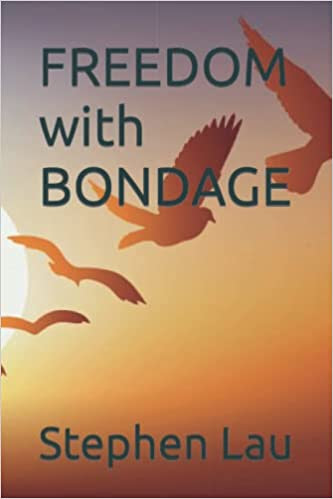
Newly published book: FREEDOM wiyh BONDAGE

Newly published book: <b>FREEDOM wiyh BONDAGE</b>
Newly published book FREEDOM with BONDAGE: You have NO FREEDOM of choices if they are controlled by your flesh to do all the wrong things, and you are held in BONDAGE.

Sunday, March 22, 2020

The Power of Unlearning and Relearning


 Unlearning and Relearning Pharmaceutical Drugs

On your healing journey, take the step to unlearn and relearn many things related to your autoimmune disease, such as myasthenia gravis.  

To heal, you must unlearn what you have previously learned, that is, letting go of all your preconceptions related to all the hows and the whys you might have got your myasthenia gravis in the first place. Remember, the knowledge you are currently having may have been generated by the limited and the finite material world you are living in.

Life itself is a sacred journey involving change, growth, and self-discovery. Knowledge is self-empowering, but it has to be distilled by true human wisdom. Therefore, to deepen your love of heath and your quest for health and healing, you must seek not just knowledge but also wisdom in order to expand your vision and stretch your soul so that you may stay both physically healthy and spiritually wise. Your knowledge and wisdom may provide you with meaning and direction to continue with every step of your long healing journey.

Unlearning Pharmaceutical Drugs

As we age, our self-made energy from the food we have consumed over the years begins to decline, and this is evidenced by our inability or difficulty to cope with the stressors of life. These stressors may have come in many different forms, such as overexposure to sunlight, polluted air, contaminated water, and a host of other lifestyle factors of modern life. After decades of abuse to our bodies, our choices—whether we have made them knowingly, or they have been imposed unwittingly on ourselves—begin to take their toll, resulting in the development of chronic conditions and degenerative diseases. To add insult to injury, our metabolic slowdown that comes with the natural process of aging makes it even more difficult to maintain our health and energy.

To deal with our health issues, many of us may desire a quick-fix, and thus turn to pharmaceutical drugs, which are toxic chemicals that only address the symptoms but without removing the causes of the health conditions.

Unfortunately, unsafe and toxic pharmaceutical drugs are prevalent. This is an indisputable fact! Unreliable drug tests abound in the medical and pharmaceutical research communities. Drug tests prior to their FDA approval may not be reliable due to the following reasons:
  • Pharmaceutical companies may often influence medical researchers, through coercion, incentive, and even threat, to produce the desired results in clinical trials. There have been many cases of data fabrication in clinical trials of drugs in order to facilitate their intended applications.
  • Clinical trials usually involve a small number of people, and may not truly reflect the outcome of those who will ultimately be using those drugs after their approval by FDA.
  • Drugs tested on animal models may be biased and even irrelevant. An artificially-induced disease in non-human animals may not yield results relevant to a spontaneous, naturally-occurring human disease.

 Relearning Pharmaceutical Drugs

Regularly taking pharmaceutical drugs does not make you live longer because longevity is always drug-free. This makes sense: taking too many pharmaceutical drugs means your body is already stressed by many physical ailments. Ironically, these drugs may do a further disservice to you by ingesting more toxins into your already toxic body.

Pharmaceutical drugs do not heal a disease; they only temporarily suppress the disease symptoms.   Remember, when you give your body a drug to replace a substance that your body is capable of making itself, you body then becomes weaker and will begin not only to manufacture less of that substance, but also to become more dependent on the outside source, which is usually the drug itself. Over time, you will become no longer drug-free.

Unfortunately, no drug can give you insight into the circumstance that created your problems in the first place. At best, it can only temporarily assuage the physical pain created by your situation. Remember, there are no miracle drugs—only wholesome natural self-healing. Utilize your body’s natural self-healing power, rather than relying on those unsafe pharmaceutical drugs. Keep yourself drug-free as much as and as long as possible!

However, it does not imply that you must desist from taking your medications prescribed by your doctor. Rather, it suggests you should always be more alert to the side effects of the drugs you are currently taking; you should not readily reach out for unsafe pharmaceutical drugs, especially over-the-counter ones, without any second thought as if they were coupons or silver bullets.

Stephen Lau
Copyright© by Stephen Lau


 To download the e-book, click here; to get the paperback copy, click here.

Saturday, March 21, 2020

The Healing Journey


The Healing Journey

One of Lao Tzu’s famous sayings is “A journey of a thousand miles begins with the first step.” The TAO journey of healing myasthenia gravis, or any autoimmune disease, is a great undertaking: every step is as important as the first; and each step is as firm as the previous one. The Chinese often like to say “feet stepping on solid and steady ground.” Your healing journey is the sum of all the steps you are going to take.

Before you take your first step, ponder on this reality: in life, all humans have two desires or pursuits—happiness and healthiness, which not only often come with many delusions and illusions but also always are unattainable and unsustainable. But the TAO may give you self-intuition and self-enlightenment to help you along your own journey of healing myasthenia gravis.

The Step of No Desire and No Intent

It is your healing journey, and only you can take your first step. So, you must choose to take your first step to go on that healing journey.

To continue on your journey, paradoxically, you must show no desire to heal and no intent to reach your destination.

But why?

The desire for good health may be difficult to sustain for someone who is currently confronted with the many health issues related to myasthenia gravis. It may seem not only difficult but almost impossible for that individual to restore natural health and get well again. Worse, ill health may even make that individual feel depressed and forget to take care of the body, and thus allowing the body's malfunctions to continue and deteriorate further.

A wise traveler on a long journey has no fixed plans, and is not intent upon arriving the destination within a certain time frame. But that traveler is ready to use all the situations and all the people encountered to help him along the long journey.
               
Likewise, healing is a long, on-going process, and not a destination. With innate and inexplicable power, it may appear that everyone and everything along your journey are also playing a part in facilitating in your favor all your endeavors in healing your myasthenia gravis.

The bottom line: take your first step of no desire and no intent for healing so as to change and to overcome any attitude of confusion and even despair related to the trauma of your myasthenia gravis diagnosis. On your healing journey, with no intent upon arriving at the destination any time soon, you will continue to keep yourself moving forward, and you will then go the long distance on your long healing journey.

The TAO

According to the TAO, being free of desires is your path to detachment, and thus giving you clarity of thinking to start your own healing journey.

Paradoxically, if you have no desire to desire for change or healing, there is stillness, in which you may see yourself gradually changing for the better in order to slowly heal yourself:

“To live a life of harmony, we need letting life live by itself. . .

So, follow the Way.
Stop striving to change ourselves: we are naturally changing.”
(Lao Tzu, Tao Te Ching, Chapter 57)

“Accordingly, we do not rush into things.
We neither strain nor stress.
We let go of success and failure.
We patiently take the next necessary step, a small step and one step at a time.
We relinquish our conditioned thinking. Being our true nature, we help all beings
return to their own nature too.”
(Lao Tzu, Tao Te Ching, Chapter 64)

According to the TAO, a good traveler neither has fixed plans, nor shows any effort to arrive at the destination:

The softest thing in the world
overcomes what seems to be the hardest.
       
That which has no form
penetrates what seems to be impenetrable.

That is why we exert effortless effort.
We act without over-doing.
We teach without arguing.

This is the Way to true wisdom.
This is not a popular way
because people prefer over-doing.”
(Lao Tzu, Tao Te Ching, Chapter 43)

Begin your healing journey, and take your first step with effortless effort and humble simplicity:

Stephen Lau

Copyright© by Stephen Lau


To download the e-book, click here; to get the paperback copy, click here.


Thursday, March 19, 2020

The TAO to Heal


Millions and billions of people worldwide are suffering from autoimmune diseases, including myasthenia gravis which is only one of the many different autoimmune disorders that are causing anxiety, fear, pain, mental confusion, and even suicidal thoughts in some of those afflicted.

According to Western medicine, there is no known cure for autoimmune diseases due to the complexity of their causes. Understandably, patients afflicted with autoimmune diseases are seeking healing from many different healing modalities, such as the Traditional Chinese Medicine (TCM), the Ayurvedic medicine, and among many others. In addition, they are desperately looking for help from herbs, fruits, and all kinds of natural nutrient supplements, as well as from physical exercises and spiritual practices, to rejuvenate their failing health due to their weakened immune systems.

The TAO may play a pivotal role in the healing process of any autoimmune disease, including that of myasthenia gravis.

The TAO is the profound wisdom of Lao Tzu, the ancient sage from China more than 2,600 years ago, who was the author of the immortal ancient classic Tao Te Ching on human wisdom.

The word “TAO” () in Chinese originally meant “road.” Later, it came to mean “way” and hence “the Way.” The TAO is “the Way” of looking at the world with a certain attitude of the mind, which is totally different from that of the West, and that is why it is so intriguing and fascinating, as evidenced by the fact that Tao Te Ching ( ), the book of the TAO by Lao Tzu, is one of the most translated books in the world.

The TAO may provide self-inspiration and self-intuition for those who have to confront all the changes and challenges when diagnosed with myasthenia gravis or any autoimmune disease.

Stephen Lau
Copyright© by Stephen Lau


Wednesday, March 18, 2020

Death and Dying


“Life begets death; one is inseparable from the other.
One is form; the other is formless.
Each gives way to the other.
One third of people focus on life, ignoring death.
One third of people focus on death, ignoring life.
One third of people think of neither, just drifting along.
They all suffer in the end.
       
Trusting the Creator, we have no illusion about life and death.
Holding nothing back from life, we are ready for death,
just as a man ready for sleep after a good day’s work.”
(Lao Tzu, Tao Te Ching, chapter 50)

“Abiding in the Creator, we do not fear death.
Following the conditioned mind, we fear everything.
Fear is a futile attempt to control things and people.

Death is a natural destination of the Way.
Unnatural fear of death does more harm than good.”
(Lao Tzu, Tao Te Ching, chapter 74)

Dying and Beyond

On the final journey, with acceptance of the inevitable fate, there is usually no anger or even sadness—just numbness that initiates the winding down of the body.
Dying is just something we all have to do. Do you want to die with grace? Dying with grace is to end well; all is well that ends well!.

A Case in Point

Francis of Assisi, the Italian Saint who chose a life of poverty in spite of his family’s wealth, said on his deathbed: “Death will open the door of life.” He died gracefully while singing.
Maybe for a believer, death is, indeed, a triumph, a meaningful exodus from this mundane world to the eternal world beyond.

A Case in Point

Martin Luther King, Jr. said in his last speech, just several days before his assassination: “It (death) doesn’t matter with me now, because I’ve been to the mountain top. . . . and I’ve looked over and I’ve seen the Promised Land.”
It was Martin Luther King, Jr.’s strong faith that led him to believe in the existence of the Promised Land beyond death. Indeed, to many believers, they are only humans having a brief existence in this transient material world, and their final destination is the eternal world beyond death.

A Case in Point

There have been many near-death experiences (NDEs) during which people claim that they have seen strange lights and tunnels, letting them have a glimpse of the eternal world beyond. Some of these instances have been written in books and become Amazon’s bestsellers, such as Heaven Is for Real (2010), about a child who saw heaven during surgery. 

Eben Alexander, a neurosurgeon and author of Proof of Heaven, said in Newsweek in 2012 that his incredible near-death experience had totally convinced him that his consciousness (the soul or self) exists somehow separate from or outside the mind, and therefore it can travel to other dimensions on its own. Eben wrote: “This world of consciousness beyond the body is the true new frontier, not just of science but of humankind itself, and it is my profound hope that what happened to me will bring the world one step closer to accepting it.”

Are you ready to believe in dying and beyond?

YOU JUST DON'T DIE!

Stephen Lau
Copyright© by Stephen Lau

Tuesday, March 17, 2020

Challenging Conventional Wisdom

Challenging Conventional Wisdom

Life is simple, and so are its precepts, but living is complicated and challenging.

It is definitely easier to follow conventional wisdom in living, even though putting it into practice may not always be that easy. At least, it has been tried and tested by many, and it may indeed be a blueprint for success for many if they follow it to the letter. 

Thinking Question

According to conventional wisdom, how do I live my life?

Conventional wisdom may not make your life extraordinary.

In life, if you want more, you must be more. You need more than just “think out of the box”; you must create your own box. Conventional wisdom may have become a crutch for countless individuals; they just hold on to it, like leech, as if it is the only roadmap to living well. There is nothing wrong with that if you are prepared to accept life as it is.

However, if you want more, conventional wisdom may not suffice. In other words, you must not accept conventional wisdom at the expense of your own personal growth and development. According to an old adage, “If you are not growing, you are dying.” So, do not let this happen to you at any phase of your life.

Wisdom is the product of intelligent thinking. But conventional thinking is more a science than an art because it focuses more on specialized knowledge than on humanized knowledge, such as wisdom in everyday living. 

Reflective Thought

Specialized knowledge focuses on specialization, instead of integration; as a result, it may lack the element of human wisdom, which is found in ancient rather than in conventional wisdom.

Case in Point

Today’s Western medicine has become so specialized and compartmentalized that holistic healing is often overlooked.

Reflective Thought

In conventional wisdom, thinking is becoming more logical and less reasonable.

Case in Point

There are three virtues in the American culture: efficiency, punctuality, and desire for achievement.

Paradoxically, they may become the three American vices, especially if there is too much emphasis on logic and not enough focus on the humanity side of reasoning. Efficiency, punctuality, and desire for achievement have created undue stress in the American culture that wrecks the lives of many.

For example, according to conventional wisdom, time is money. But time is not precious; time is but a construct. Efficiency and punctuality have imposed undue time-stress on nearly every one of us. According to Albert Einstein, time is only relative. Time-stress has led to multi-tasking. Nowadays, many of us are living for the future, and not in the present.

“I never think of the future. It comes soon enough.” Albert Einstein

Given that it is human desire to see only one aspect of the truth we happen to perceive, we are more inclined to fashion it into a perfectly logical system, which we call conventional wisdom.

In a nutshell, conventional wisdom is what the majority of people have already accepted as the norm. It focuses on specialized rather than humanized knowledge. What is applicable to most people may not be applicable or even relevant to you if you want to live an extraordinary life.

THE TAO OF LIVING LONGER

Stephen Lau
Copyright© by Stephen Lau

Monday, March 16, 2020

Understanding "Why Prayers Are Seldom Answered"


“Prayers not answered” simply means “expectations not fulfilled.”

But what are your “expectations”? And where do they come from?

You experience whatever that happens to you through your five senses (seeing, hearing, tasting, touching, and smelling) as a result of the choices of all your actions, inactions, and reactions in your everyday life.

Your sensations often become your own perceptions, which then form your own assumptions and predictions; for example, a good education will lead to a successful career, and bring about happy relationships.

All your “expectations” are only the personal and the subjective perceptions of your mind. But your “expectations” are often unreal and even self-delusive.

Even what you think you see with your own eyes may not necessarily be the reality.

To illustrate, in 1997, Richard Alexander from Indiana was convicted as a serial rapist, because one of the victims and her fiancé insisted that he was the perpetrator based on what the victim and her fiancé claimed that “they saw with their own eyes.”

But the convicted man was later exonerated and subsequently released in 2001, based on the new DNA science and other forensic evidence. Experts explained that a traumatic emotional experience, such as a rape, could “distort” the perceptions of an individual. That explains why the woman and her fiancé “swore” that Richard Alexander was the rapist, but evidently he wasn’t.

To illustrate “unreal expectations”: Helen Keller, celebrated author, political activist, and philanthropist, was the first deaf-blind person to earn a Bachelor of Arts degree; she became deaf and blind at an early age of less than two.

Imagine you were Helen’s parents: would you have “darkened expectations” of the future of Helen when she suddenly became deaf and blind?

Another illustration of “unreal expectations”: Shon Robert Hopwood, a young American convicted of bank robbery and sentenced to prison, became well-known as a jailhouse lawyer. While serving time in prison, Shon started spending time in the law library, became a jailhouse lawyer for the inmates, and ultimately a very accomplished United States Supreme Court practitioner by the time he left prison in 2009. Currently, Shon is professor of law at Georgetown University Law Center.

If you were the parents of Shon, would your own “expectations” of your son have fallen short after his conviction of 12 years of imprisonment?

The truth of the matter

Your perceptionswhether true or untruebecome your realities, and are then stored in your subconscious mind as your memories.

Whenever you want to make a choice or decision, it’s your subconscious mind that provides your conscious mind with your many attitudes, beliefs, and predictions—all based on your memories of your past experiences. Your thinking mind then begins to process and project them into the future as your “expectations to be fulfilled.”

Points to Remember

Perceptions may easily become distorted and unreal. So, don’t let your own perceptions become your assumptive predictions.

All “expectations” are in the future, and their timeline is indefinite. So, don’t jump to any conclusion yet that they’re “not fulfilled.”

The past was gone; the future is yet to come; only the present is real. So, don’t use the past to predict the future as your “expectations to be fulfilled.


Stephen Lau
Copyright© by Stephen Lau

Sunday, March 15, 2020

Controlling and Letting Go


Controlling and Letting Go

Thanks to our artists, we all pretend well; but deep down the layer of pretense is the awareness of the underlying reality. To suppress that reality, we turn to controlling, which is a subconscious way to enhance the reality of our expectations in life.

Most of us are controlling to some extent. Thanks to our culture, underlying every one of us is the inherent belief that we should be in control of everything around us at all times. The American culture advocates control for self-independence and survival.

What exactly is controlling? Why makes people want to control others as well as their own destinies?

Controlling is a coward way of running away from everyday problems; it is a futile attempt to avoid everyday stress. Essentially, it is a direct or subtle way of exerting influence over others so that we may have power over the turns of events in our own lives. In other words, we delude ourselves into thinking that we can make things happen the way we want them to happen in our lives through control and manipulation of others, including ourselves.

Reflective Thought

Control and discipline may look similar but they are different.

Case in Point

We can discipline our children so that they may do the right things without getting into trouble. But many of us still want to “control” them even when they have turned adults; we may want to steer them away from the difficult paths we had trotted ourselves when we were young. That, in reality, is controlling. We can give them advice, but imposing anything on them is deemed as exerting control. “It’s for their own good!” is no more than an excuse to control.

Reflective Thought

Not controlling means willingness in letting go of one’s expectations in life.

Case in Point

The Biblical story of the parable of the prodigal son is a good illustration of what is NOT controlling. (Luke 15: 11-32) In the story, a man had two sons, and the younger son asked for his fortune; the father gave it to him, and he spent it recklessly on women  and gambling. When he was out of money and the land was struck by a famine, he returned home to his father, who welcomed him back with open arms. To many, the story highlights God's forgiveness of repentant sinners. But the story also illustrates the power of letting go and not controlling. 

Thinking Question

If I were the father of the prodigal son, would I have given him the inheritance due to him knowing that he would squander it?

Clearly, in addition to being wayward, the younger son was rebellious, asking for his inheritance before the time was due. If the father had said “no” to his son's request, he would be seen as “controlling” the destiny of his son. The father must have admonished his son for his reckless behavior. So, saying “no” to his son’s request should be viewed more as “controlling” than as “disciplining” his son. It must be pointed out that the father must have anticipated the possible tragic outcome of giving his son his inheritance. Nevertheless, the father gave him the money; he was, in fact, saying “yes” to the realities of life. He would sacrifice his life expectations to give his son an opportunity to learn the valuable lesson from the potential life-transforming changes that might befall on him.

In the Biblical story, the ending was favorable because the father put his trust in God, who oversees the big picture. For those who do not believe in God or divine intervention, the story could have ended the same way too. Why? It is because events and things in nature follow a natural course or pattern. We should go with the natural flow rather than fighting against it. Spontaneity brings harmony, while resistance results in disharmony. If the prodigal son wanted his inheritance, there was no way to stop him. If he would squander his money, he would do the same then or later when he duly inherited his money after his father's death. The objective was not to avoid the spending through controlling but to let the son learn a valuable lesson from the spending. Of course, in real life, the ending could have been tragic: the son spent the money and never came home—but, again, that is life! 

If you stop controlling, you are learning to let go. If you let go, you are learning how not to control.

Stephen Lau
Copyright© by Stephen Lau

Saturday, March 14, 2020

Tomorrow Is Another Day

Scarlet O’Hara in Gone With the Wind said at the end of the movie: “Tomorrow is another day.”                      


As a parent, you may want to make plans for you children. But the most important thing is to enjoy them. There is so much enjoyment teaching them everything, such as how to read.


Yes, tomorrow is another day, but that day may or may never come. Fortunately or unfortunately, we always choose to believe that it will come. Fortunately in that it may give us hope and expectation; unfortunately in that it may divorce ourselves from the realities of life, making us less grateful of the present or less thankful of what we already have.


But living in the now is exemplary of the consciousness of being. Today is now, and mindfulness of the present is realization not only that tomorrow is another day but also that it might never come. This mental consciousness may make you aware that you are precious and unique because now you have become fully awake. Living in the now means asking yourself mind-searching questions: What do I need to know now? What do I need to love now? What do I need to be grateful for now? In short, today provides the compass and road map for your life journey, which might abruptly end tomorrow.


Living in the now is easier said than done because the human mind has a tendency to focus on the past or to project itself into the future, but seldom stays in the present.


Our actions or inactions are derived and driven by our thoughts and memories of our past experiences. If those experiences were negative, our conscious and subconscious mind will tell us to avoid them in the future; on the other hand, if they are positive, they tend to instruct us to repeat them in the future. Accordingly, the human mind will constantly shuffle between the past and the future. As a result, it seldom stays in the present moment. To illustrate, while talking on the cell phone, how often do we talk about what happened or what we are going to do next? If we think more deeply, the subject of our conversation mostly involves mostly the past or the future. In a worse scenario, many of us are talking or texting while driving, in other words, our mental focus is certainly not on the now—which is driving our car.


Mindfulness is your purposeful attention to the present moment. This purposeful attention enables you to recognize your thoughts as they occur, but without paying judgmental attention to them; in other words, they neither distract nor disturb you, and you just observe them objectively, like watching a movie about yourself unfolding before your very eyes.


To train your mind to focus more on the present, concentrate on your breathing. Most of us are totally unaware of our breaths, unless we are short of breath after running or climbing stairs, or due to some medical conditions. Concentration on how you breathe in and breathe out, as well as your body’s sensations during the inhalation and exhalation trains you to develop mindfulness. Understand that your body is yours only, and it is always with you. Finding the moment-by-moment relationship with your body through your breathing is your pathway to wellness of the body, the mind, and the soul.

Stephen Lau
Copyright© by Stephen Lau


Friday, March 13, 2020

Food As Medicine

According to modern medicine, there is no known cure for autoimmune diseases, and the only way to reduce the disease symptoms is through your diet.

Hippocrates, the father of modern medicine, once said, "Let foods be your medicine; and your medicine be your food."

There is so much truth in that statement. All foods contain molecules that are messengers telling your body cells to respond in a certain way, either positively or negatively. In other words, the communication between your body cells impacts how your body functions, in particular, your immune system. Good foods are always better than medications, which work for only 50 - 60 percent of people at best. Therefore, the pivotal role of food on those with myasthenia gravis disorder cannot be over-stressed. As a matter of fact, research showed that some patients suffering from rheumatoid arthritis had their symptoms cured simply by changing their diets. 

So, food matters, when it comes to autoimmune diseases, such as myasthenia gravis. When we eat something we are not supposed to eat, our bodies send us a message in the form of inflammation, causing irritation and inflammation in our bodies. Unfortunately, many a time, we fail to recognize the message, or simply ignore it. If similar messages as warning signs continue to be overlooked or ignored, the improper food may cause damage to body cells and the immune system.

Autoimmune diseases occur when the immune system becomes dysfunctional, such that it has become incapable of differentiating foreign invaders to the body, such as viruses and bacteria, from natural parts of the body, such as cells and tissues. In addition, a compromised immune system may cause imbalance between killer T cells and antibody-providing B cells (the former are like warriors fighting against foreign invaders into the body's immune system, and the latter are like the weapons and ammunitions used in the fight).

Avoid foods that cause inflammation, given that inflammation is one of the common denominators of many autoimmune diseases. Consume gluten-free foods.

Avoid foods that are high in glycemic index, that is, foods that are loaded with sugar. Bagels, breakfast cereals, cakes, cookies, crackers, and all soft drinks are not good for your immune system. All processed foods made with white flour and white sugar are not recommended. Also, beware of hidden sugar; read food labels before purchase or consumption.

Avoid animal fats from beef because cows nowadays are corn-fed, rather than grass-fed; their meat is loaded with artificial hormones that cause inflammation in humans. Accordingly, dairy products should also be avoided as much as possible. Conversely, good fats are good for the immune system; consume more fish, flax, avocados, coconuts, nuts and seeds that promote a healthy immune system.

Remember, you are what you eat, and you become what you eat. Use food to help your myasthenia gravis disorder, one of the many autoimmune diseases. It may not cure your disease, but it will certainly reduce the severity of your disease symptoms.

Read my book My Myasthenia Gravis to find out more about the autoimmune one disease.

THE TAO OF LIVING LONGER
Copyright© by Stephen Lau